



Your brakes are made up of several parts that work together to bring your vehicle to a safe stop. Understanding these components can help you recognize when something is not quite right. The major parts include brake pads, rotors, calipers, brake lines, and the master cylinder. Each plays a specific role, and a failure in any one of them can affect how well your brakes perform overall. Keep reading as we answer the most common questions about brakes for drivers in Villa Park, Illinois.
What Do Brake Pads Do?
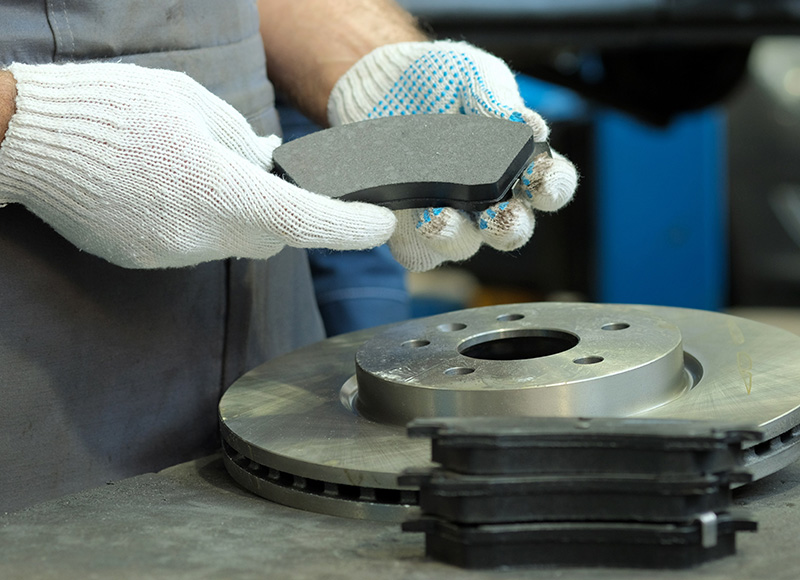
Brake pads are the friction material that clamps against the rotor to slow your vehicle. They are one of the most frequently replaced components in the brake system. Over time, the pad material wears down, which is why regular inspections are so important. Most pads include a small metal tab called a wear indicator that produces a high-pitched squealing sound when the pads are getting thin and need attention.
What Is a Brake Rotor?
The rotor – also called a brake disc – is the large, flat metal disc attached to your wheel hub. When you press the brake pedal, the calipers squeeze the pads against the rotor to create friction and reduce speed. Rotors can warp or develop grooves over time, especially if worn pads are not replaced promptly. A pulsating or vibrating pedal is often a sign of rotor issues.
What Does the Brake Caliper Do?
The caliper is the hydraulic clamp that holds the brake pads and presses them against the rotor when you apply the brakes. If a caliper sticks or seizes, it can cause uneven braking, pulling to one side, or accelerated wear on one set of pads. Calipers are a critical control component and should be inspected regularly as part of routine service.
What Is the Master Cylinder and How Does It Control Braking?
The master cylinder is the heart of your hydraulic brake system. When you press the pedal, the master cylinder converts that physical force into hydraulic pressure, which travels through the lines to activate the calipers at each wheel. Brake fluid fills this system and must be maintained at the correct level. If the fluid is low or contaminated, braking performance can suffer significantly.
What Are the Signs of Failing Brakes?
Knowing the warning signs of brake problems is one of the most important things for drivers to know. Watch for these indicators: a squealing or grinding noise when braking, a soft or spongy pedal, the vehicle pulling to one side, a burning smell after driving, or the warning light appearing on your dashboard. If you notice any of these symptoms, it is best to have your brakes inspected as soon as possible.
How Often Should Brakes Be Inspected?
Brake wear varies depending on your driving habits, vehicle type, and road conditions. As a general guideline, most technicians recommend having your brakes checked at least once a year or every 12,000 miles. Drivers who frequently navigate stop-and-go traffic may experience faster wear and should schedule inspections more regularly.
Visit Haggerty Buick GMC for Brake Service
If you have a specific question about your brakes or just want to make sure the system is in good shape, the team at Haggerty Buick GMC is here to help. Serving drivers throughout Villa Park, Illinois, our certified technicians can inspect, diagnose, and service your brake system using genuine GM parts. Visit us or schedule your service appointment online today.


